
What Actually Happens to Your Body After 30 Days of Pilates
A no-hype look at the first month — for anyone who's curious but hasn't booked yet.
You've seen the reformer videos. You've heard a friend rave about it. But you're still standing at the edge of the pool, wondering: is this actually going to do anything for me, or is it just stretching with fancy equipment?
Fair question. So let's skip the marketing and walk through what genuinely tends to happen in your first 30 days — week by week — when you show up two or three times a week as a total beginner.
Week 1: "Wait, how am I sore there?"
Your first class won't leave you gasping like a bootcamp would. Pilates is low-impact and controlled — but don't mistake gentle for easy. You'll finish feeling worked, not wrecked.
The surprise comes the next morning. You'll be sore in muscles you didn't know you had: deep in your abdomen, along your inner thighs, across the small stabilisers around your spine and hips. That's the whole point. Pilates targets the deep core and postural muscles that most workouts skip entirely. Week 1 is your body waking those up for the first time in years.
Week 2: The coordination clicks
This is where a lot of first-timers almost quit — and where the magic actually starts. In week one, everything feels awkward: you're thinking about your breath, your feet, the springs, your shoulders, all at once.
By week two, your brain and body stop arguing. The movements start to feel less like a puzzle and more like something you can do. You'll notice you're not glancing at the instructor for every single cue. This is real neuromuscular learning — your nervous system getting more efficient — and it's genuinely satisfying to feel it happen.
Week 3: Posture and everyday ease
Around now, the benefits leave the studio and follow you home. The most common thing beginners report at the three-week mark isn't a six-pack — it's sitting up straighter without trying. Standing taller. Reaching for something on a high shelf and realising it didn't tweak your back.
That's your improved core stability and body awareness showing up in ordinary life. Many people with desk-job stiffness or niggling lower-back tightness start to feel noticeably looser and more supported through the midsection here.
Week 4: The shift you actually came for
By the end of the month, the changes are less "sore" and more "strong." You'll likely notice:
Better balance and control — moving with more intention, stumbling less
A more connected core — not necessarily flatter, but tighter and more responsive
Improved flexibility — especially through the hips, spine and shoulders
A calmer head — the breath-and-focus rhythm of Pilates is quietly great for stress
Will you look dramatically different in photos after 30 days? Probably not — anyone promising that is selling something. But you'll move differently, feel differently, and — this is the part that keeps people coming back — you'll actually want to return.
The honest bottom line
Thirty days won't transform your body overnight. What it will do is show you, quickly and clearly, that this works — and hand you a foundation of strength, posture and body awareness that everything else builds on. Most people don't fall in love with Pilates in class one. They fall for how they feel walking out of class ten.
The hardest part is booking the first one.
Ready to start your 30 days?
New clients get 5 classes for $55.
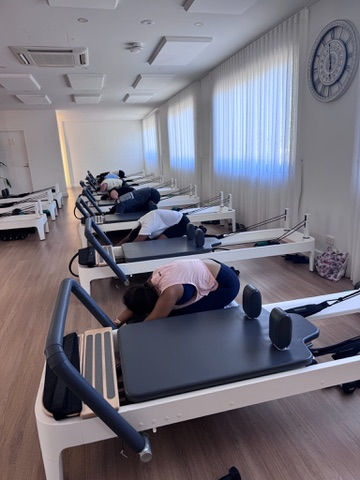
New to reformer Pilates and nervous about what to expect? Come as you are — our instructors will walk you through every spring and strap. No experience needed.

Comments