
What to Expect in Your First Reformer Pilates Class
So you've booked your first reformer class. Maybe you've seen the machine on Instagram and thought "what is that thing?" Maybe a friend won't stop talking about it. Either way — you're a little nervous. That's completely normal, and we promise it passes about ninety seconds in.
Here's exactly what to expect, so you can walk in knowing the drill.
First things first: what even is a reformer?
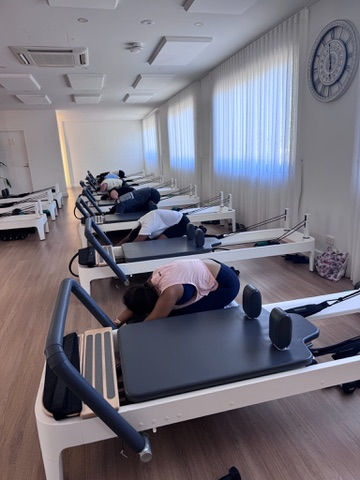
It looks more intimidating than it is. A reformer is a sliding bed (the "carriage") set on a frame, with springs underneath and straps at either end. The springs create resistance — you push, pull, and stabilise against them. That's it.
The beauty of it is control. The machine supports you while it challenges you, which is why reformer Pilates works just as well for total beginners as it does for people who've been moving for years. Nobody is "too unfit" to start. You'll adjust the springs to your level, not the other way around.
What to wear and bring
Keep it simple:
Comfortable activewear you can move and stretch in. Fitted is better than loose, so the instructor can see your alignment.
Grip socks — these are a must on the reformer (the carriage is slippery). If you don't have a pair, grab some at the studio.
A water bottle. You'll want it.
That's the whole list. No need to bring a mat or any equipment — everything's here.
Finding us (we're upstairs)
Quick heads up: The Pilates Project is one level up from the street in Concord. Head up the stairs and you'll find us — give yourself a couple of extra minutes the first time so you're not rushing.
Try to arrive 10 minutes early. It gives you time to meet your instructor, get your grip socks sorted, and have the machine set up before class starts. Coming in flustered at the last second is the only thing that actually makes a first class stressful, so beat that by showing up early.
What the class itself feels like
Your instructor — that'll be Sylvia or Wendy — will walk you through everything. Spring settings, foot placement, how the straps work. You will not be left to figure it out on your own.
Because we cap every class at 11 spots, your instructor can actually see you. If something doesn't feel right, they'll come over and adjust it. If you need an easier or harder option, they'll give you one. This is the difference between a boutique studio and a packed-out gym class — you're a person here, not a number in row six.
The hour flows. You'll move through a sequence that works your whole body — core, legs, arms, the lot — with the springs doing the resisting. It's low-impact but don't be fooled: you'll feel it. In the best way.
The worries everyone has (and the honest answers)
"Will I be the only beginner?" No. Reformer classes are mixed-level by design, and the instructor gives modifications constantly. Half the room is taking a different option to the person next to them.
"What if I can't keep up?" You take it at your pace. Resting when you need to is allowed and encouraged. Nobody's watching you — they're all focused on their own springs.
"Will I be sore?" Possibly a little, especially through the core, and that's a good sign. It settles fast, and it gets easier every class.
How you'll feel after
Most people walk out taller. There's a lightness to it — you've worked hard, but you're not wrecked. That mix of "strong" and "stretched" is exactly why reformer gets people hooked.
And the first class is genuinely the hardest one, because it's the only one where everything's new. By your second visit you'll know where to go, what to grab, and what to expect. The nerves are gone and you just get to move.
Ready to give it a go?
Your first class is waiting. Book your intro session at The Pilates Project in Concord — grip socks on, water bottle full, and we'll take care of the rest.

The article offers a comprehensive overview of what to expect from a reformer Pilates class. However, I wonder about the emphasis on the instructor's role in guiding new attendees. While personalized attention is beneficial, it raises questions about the balance between individual focus and group dynamics. Rooli highlights how crucial a supportive environment can be in easing first-time nerves, yet there's a risk of dependency on instructors.
This article provides a thorough overview of what to expect in a reformer Pilates class. It highlights the importance of having the right mindset and preparation, such as arriving early and wearing proper attire. The mention of Pay ID https://wen.org.nz/ for payments could enhance convenience, making it easier for beginners to commit without worrying about cash or card transactions. Overall, a helpful guide for newcomers.
The article provides an insightful overview of what to expect during a first reformer class. While it emphasizes the supportive environment and the adaptability of the workout, it also raises questions about the long-term sustainability of such practices. The comparison to Vegastars in terms of personalization could be explored further, highlighting how tailored experiences can enhance the overall fitness journey.
The article presents a thorough breakdown of what to anticipate in a reformer Pilates class, helping to demystify the experience for newcomers. It's interesting how the system is designed to accommodate everyone, but I find it crucial to reflect on the potential mental barriers beginners may face. Engaging in a mixed-level class, where others might be more advanced, could evoke anxiety. The mention of Royal Reels in the context of societal views on fitness could provide further insight into how accessibility and inclusive environments can reshape perceptions of exercise.
Reformer Pilates presents an interesting choice for those seeking a new fitness challenge. The article does a good job highlighting the supportive nature of the reformer, yet there remains a concern about the comparison of this experience to distractions like The Pokies. Both can lure individuals in, but the key is finding balance and ensuring that the commitment to personal fitness is prioritized over temptations that offer fleeting rewards.